When the Refiner's Fire Anneals you, Don't Forget to Kneel
Heavy Metal and Spirituality mix better than you think.

When the going gets tough -
When the trials get rough -
When you're being annealed -
Don't forget to kneel
Anneal: to heat (metal or glass) and allow it to cool slowly, in order to remove internal stresses and make it easier to work.
As an almost related but not really related point: Quantum computing has an annealing process as well - that’s incredibly fascinating!
Quantum annealing (which also includes adiabatic quantum computation) is a quantum computing method used to find the optimal solution of problems involving a large number of solutions, by taking advantage of properties specific to quantum physics like quantum tunneling, entanglement and superposition. (Source: Quantum Annealing in 2023: Practical Quantum Computing)
How does quantum annealing process work?
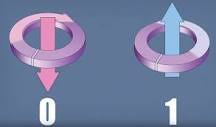
As stated, each qubit has a bias and qubits interact via the couplers. When formulating a problem, users choose values for the biases and couplers. The biases and couplings define an energy landscape, and the D-Wave quantum computer finds the minimum energy of that landscape: this is quantum annealing. (D-Wave: What is Quantum Annealing? - D-Wave System Documentation)
Annealing Copper
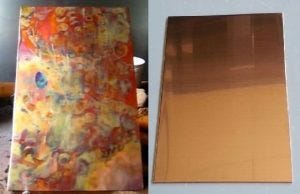
(Source)
===
A voice hath spoken from the dust,
Its message pure, without alloy,
Of treasured hope and sacred trust:
Oh, “men are that they might have joy.”
*Source: Men are that they might have joy, Hymnal, Church of Jesus Christ of Latter-day Saints
The meaning of the term 'alloy' is a substance formed from the combination of two or more metals. Alloys can also be formed from combinations of metals and other elements.
In the pain, the agony, and the heroic endeavors of life, we pass through a refiner’s fire, and the insignificant and the unimportant in our lives can melt away like dross and make our faith bright, intact, and strong. In this way the divine image can be mirrored from the soul. It is part of the purging toll exacted of some to become acquainted with God. In the agonies of life, we seem to listen better to the faint, godly whisperings of the Divine Shepherd.
*Source: James E. Faust, The Refiner’s Fire, General Conference, 1979
The Refiner’s Fire
Adversity generally comes as a consequence of one or more of the following: our own foibles and sins, someone else’s inhumanity, or the higher purposes of a loving Father’s wisdom. Regardless of why they may come, trials offer us an opportunity to strengthen and refine ourselves, to trust in or to reject our God. Each struggle fortifies us against the next siege, if we endure. And the antidotes to adversity’s accompanying discouragement and despair are ever the same: faith in the Lord Jesus Christ, repentance, obedience, endurance, and communion with the Infinite, whereby forgiveness and comfort come. We can be sure that in the end God will always give us what we need to make us whole—if we turn to Him. That wholeness is burned into our hearts by the refiner’s fire, which, if allowed to work its miracle, will, among other things, enable our “confidence [to] wax strong in the presence of God” (D&C 121:45). And although at times in our trials it may seem that the just suffer and the wicked do not, justice will always prevail in God’s eternal plan, and mercy will be graciously extended to the truly penitent.
Source: Adversity: The Refiner’s Fire in Religious Educator Vol. 8 No. 1 · 2007
==
A Refiner of Silver
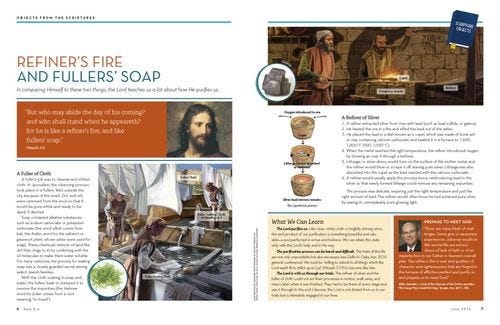
A refiner extracted silver from ores with lead (such as lead sulfide, or galena).
He heated the ore in a fire and sifted the lead out of the ashes.
He placed the lead in a dish known as a cupel, which was made of bone ash or clay containing calcium carbonate, and heated it in a furnace to 1,600–1,800˚F (900–1,000˚C).
When the metal reached the right temperature, the refiner introduced oxygen by blowing air over it through a bellows.
Litharge, or silver dross, would form on the surface of the molten metal, and the refiner would blow or scrape it off, leaving pure silver. Litharge was also absorbed into the cupel as the lead reacted with the calcium carbonate.
A refiner would usually apply this process twice, reintroducing lead to the silver so that newly formed litharge could remove any remaining impurities.
The process was delicate, requiring just the right temperature and just the right amount of lead. The refiner would often know he had achieved pure silver by seeing its unmistakably pure glowing light.
(Source)